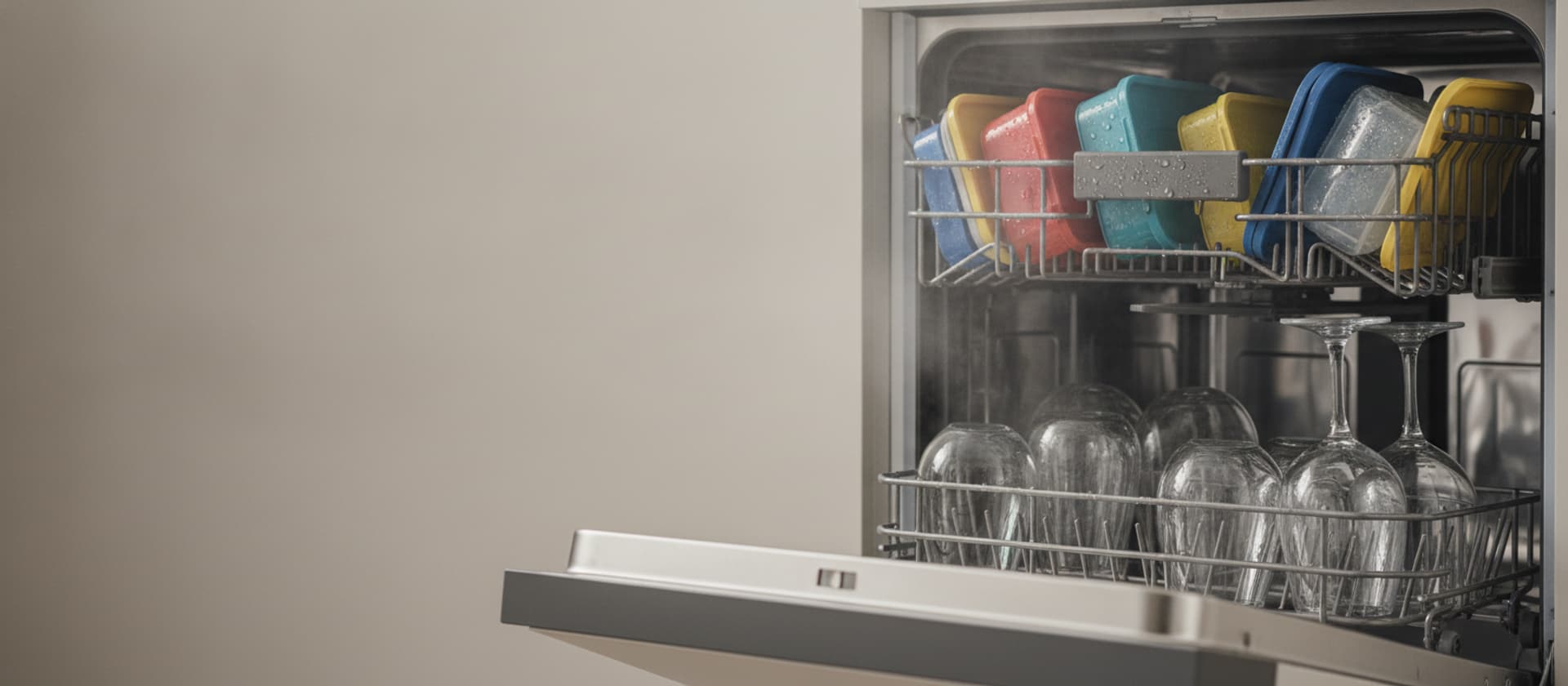
Dishwasher Not Drying · Diagnostic-First · LA Home Repair · Same Day
Dishwasher Not Drying Dishes
Dishes come out wet at the end of the cycle. Before it's a repair, it's usually rinse aid or the wrong cycle — we'll tell you which. Same-day across Los Angeles, Orange, Ventura, Santa Barbara, San Bernardino, Riverside, and San Diego. $89 residential diagnostic. (424) 325-0520
AI Diagnostic · free · about a minute
Dishwasher acting up?
Describe it in your own words — get the likely causes and a repair cost range before you book.
Our Branches
10 service territories across Southern California
Answer first
The first question isn't "what broke" — it's "how does your dishwasher dry?"
Two designs dry two different ways, and the fix depends on which you own. Condensation dryers (Bosch, Miele, most modern units) have no heating element — they use a hot final rinse and a cool stainless tub so moisture condenses and drains. They live or die on rinse aid, and they dry plastic poorly by design. Heated-dry machines (many GE, Whirlpool, Frigidaire, Maytag, KitchenAid) have an exposed metal element or a vent fan that actively evaporates water, so a dead element or tripped thermostat leaves dishes wet. The single most common quick fix on either type: refill the rinse-aid dispenser. $89 residential diagnostic, waived with repair. BHGS #A49573, EPA 608 Universal certified (#1346255700410).
Here's the honest version most search results skip: the majority of "not drying" calls aren't broken parts at all. They're an empty rinse-aid dispenser, an eco cycle with no heat, a machine packed too tight, or plastic that was never going to dry on a condensation unit. Our techs at Same Day Appliance Repair work those out first, because there's no reason to sell you a part when the fix is a $6 bottle of rinse aid.
Below we walk the design split, then the eight real causes in honest order. Overview: dishwasher repair. Related: dishwasher not cleaning · dishwasher error codes.
The design split
Condensation drying vs heated dry — know which you have.
This one distinction explains most drying complaints. Open the door and look at the tub floor: a thick metal loop (a calrod element) means heated dry; a smooth floor with no visible element means condensation.
| Condensation drying | Heated dry / fan | |
|---|---|---|
| Brands | Bosch, Miele, most modern EU-style | Many GE, Whirlpool, Frigidaire, Maytag, KitchenAid |
| How it dries | Hot final rinse + cool stainless tub; moisture condenses on the wall and drains | Exposed element or vent fan evaporates water |
| Rinse aid | Essentially required | Strongly recommended |
| Plastic | Dries poorly (holds no heat) | Dries better (element adds heat) |
| What fails | Weak final-rinse heat, fan/zeolite path, auto-open actuator | Burned-out element, tripped high-limit thermostat |
So a Bosch owner and a Whirlpool owner with wet dishes have genuinely different problems. Bosch documents that its condensation process runs "instead of utilizing a heating element" and that plastics "do not retain heat"; GE documents its heating element as "a thin circular tube at the bottom of the tub." Match the fix to the machine.
Cause 1
Rinse aid is empty — the number-one cause on both designs.
Rinse aid lowers water's surface tension so it sheets off the dishes instead of beading into droplets that cling and leave the load wet (and spotty). GE and Bosch both document this directly, and it's the first thing we check on every drying call. On a condensation dryer it's not optional — without rinse aid, those machines simply don't dry well. Refill the dispenser (the cap on the inside of the door), set it to a mid or high dose, and run a load. This alone resolves a large share of "not drying" complaints. If your dispenser is full but still not helping, jump to cause 5 (a broken dispenser mimics an empty one).
Cause 2
Bosch CrystalDry, AutoAir, and PureDry — and what fails.
Bosch's higher lines add drying tech on top of condensation. PureDry is the standard closed condensation process. CrystalDry uses a natural mineral, zeolite, that adsorbs humidity and releases heat (Bosch cites up to ~176°F), recirculating hot dry air — Bosch claims markedly better drying, including plastics. AutoAir motorizes the door to pop open at cycle end and vent the moist air.
When drying degrades on these models with rinse aid full: AutoAir won't open correctly if the machine isn't installed level (Bosch explicitly cites leveling), or its door actuator has failed; CrystalDry leans on its sealed zeolite chamber, fan, and heater path, so a fan or heater fault there is a technician diagnosis. These aren't customer-reset items — if a leveled machine with rinse aid still won't dry, book a look.
Cause 3
Heating element or high-limit thermostat (heated-dry models only).
On calrod heated-dry machines — many GE, Whirlpool, Frigidaire, Maytag, KitchenAid — a burned-out heating element or a tripped/failed high-limit thermostat leaves dishes wet, and usually the wash water feels under-heated too. On Whirlpool-family units this often surfaces as the F7E1 code ("heating element doesn't work"), which is OEM-published. Our techs meter the element and thermostat on-site; replacement runs $180 to $460. This cause does not apply to pure-condensation Bosch or Miele machines — they have no element to fail, which is exactly why the design split matters.
See also: Whirlpool dishwasher error codes (the F#E# heat codes) and Whirlpool dishwasher not drying (brand-specific).
Cause 4
The dry option was never turned on.
A big chunk of "not drying" is simply an eco or quick cycle running with no heat. Bosch's Extra Dry and Sanitize options add heat to the final rinse; GE machines have Heated Dry, Power Dry, Dry Boost, or Hi-Temp Rinse. Heavier wash cycles run hotter and dry better than the short ones. If you've been choosing the fastest cycle, switch to a hotter one or enable the dry boost and test a load — that's free, and it's often the whole answer.
Cause 5
Rinse-aid dispenser failure — a full one that isn't dispensing.
Distinct from an empty dispenser: the cap can crack or unseat, or the dispenser can stop releasing rinse aid even when full. GE tells owners to confirm the dispenser cap is seated and functioning; Bosch addresses the dispenser as a serviceable component. If your dispenser is topped up and dishes still come out wet, a failed dispenser is a real suspect — and it's an inexpensive fix relative to an element or control repair.
Cause 6
Loading, plastic, and unloading order.
Loading discipline is half the drying result, especially on condensation dryers. Both Bosch and GE recommend unloading the bottom rack first, so water pooled on upper items doesn't rain down on dishes that already dried. Don't overcrowd — leave space for air and heat to move. Turn cups and bowls so they don't cradle a puddle, and give dimpled or etched items a shake (GE notes water pools in "dimples, indents or etching"). And accept the physics: plastic holds almost no heat, so on a condensation machine it will be the last thing to dry, if it dries at all.
Cause 7
Hard-water spotting mistaken for wet dishes.
Southern California water is hard, and the white film or spots it leaves get confused with water that didn't dry. If it wipes off as a powder, it's minerals, not moisture — rinse aid (which sheets water off) is the main fix, and units with a built-in softener use dishwasher salt. Water temperature matters too: GE recommends incoming water at 120 to 140°F, so run the hot tap at the sink right before you start a load. Cold fill water both under-dries and worsens spotting.
DIY checklist
Run through these before you book a visit.
- Refill rinse aid and set a mid/high dose. Number-one fix on both designs.
- Pick a hotter cycle or turn on Extra Dry / Dry Boost / Heated Dry.
- Run the hot tap at the sink first so the fill water is 120–140°F.
- Load with space; angle cups and bowls so they don't hold water.
- Unload the bottom rack first to avoid drip-down.
- Crack the door open a few minutes at the end (helps condensation dryers a lot).
- Accept plastic won't fully dry on a condensation machine — shake it off.
If glass and ceramic are still wet after all that, or the wash water feels cool on a heated-dry unit, that's when it's a real repair.
Honest opinion
Most "not drying" is a habit fix. Here's the line.
We'd rather save you a service call than sell you one. Refill rinse aid, choose a hotter cycle, load smarter, unload bottom-first, crack the door — that clears the majority of drying complaints for free. It becomes a genuine repair when a heated-dry machine has a dead element or high-limit thermostat (wet dishes plus cool water), a condensation model can't reach final-rinse temperature, a rinse-aid dispenser is physically broken, or a CrystalDry/AutoAir/fan mechanism has failed. The $89 diagnostic tells you exactly which side of that line you're on, and it's waived if you approve the repair.
Pricing
Drying-repair costs in Southern California.
$89 residential diagnostic, waived with repair. No emergency surcharge — same $89 anytime.
| Repair | Typical cost |
|---|---|
| Diagnostic | $89, waived with repair |
| Rinse-aid dispenser | $180 to $320 |
| Heating element (heated-dry models) | $180 to $420 |
| High-limit thermostat | $180 to $340 |
| Vent / drying fan (fan-assisted models) | $220 to $420 |
| Auto-open door actuator (Bosch AutoAir) | $260 to $460 |
| CrystalDry fan / heater path | $300 to $620 (varies) |
| Warranty | 90 days parts and labor |
FAQ
Dishwasher not drying, common questions.
Why does my Bosch dishwasher leave dishes wet when it never used to?
Most Bosch (and Miele) dishwashers dry by condensation, not a heating element — they rely on a hot final rinse plus a cool stainless tub so moisture condenses on the tub wall and drains away. The single biggest reason a condensation dryer starts leaving dishes wet is an empty rinse-aid dispenser: rinse aid breaks the water's surface tension so it sheets off instead of clinging in droplets. Refill it first. If it's a CrystalDry or AutoAir model and drying still degrades with rinse aid topped up, the zeolite/fan path or the auto-door-open actuator may be failing, which is a technician diagnosis. Bosch also notes the machine must be installed level for the auto-open door to work. $89 residential diagnostic, waived with repair.
My plastic containers are always wet but the glasses are dry. Is the dishwasher broken?
No — that's physics, not a fault, especially on condensation dryers (Bosch, Miele). Glass and ceramic hold heat, so residual warmth evaporates the last droplets; plastic holds almost no heat, so water just sits on it. Bosch documents this directly. The fixes are habit, not repair: keep rinse aid full, choose an Extra Dry or Sanitize option if you have one, crack the door open for a few minutes at the end, and give plastic items a quick shake. If glass and ceramic are ALSO coming out soaked, then it's worth a service look.
How do I know if it's the heating element or just rinse aid?
First, which kind of dryer do you have? If it's a Bosch or Miele (condensation drying, no exposed element), there's no heating element to fail — chase rinse aid, loading, and the dry option. If it's a US-style heated-dry machine (many GE, Whirlpool, Frigidaire, Maytag, KitchenAid — you'll see a metal calrod element on the tub floor), then a burned-out element or a tripped high-limit thermostat is a real possibility, and dishes usually come out wet AND the water feels under-heated. On Whirlpool-family machines that fault often shows as the F7E1 code (heating element doesn't work). We test the element and thermostat with a meter on-site. Element or thermostat replacement runs $180 to $460.
The rinse-aid dispenser is full but dishes are still wet. Now what?
A full dispenser that isn't actually releasing rinse aid mimics an empty one. Check that the dispenser cap is seated and not cracked (GE and Bosch both call this out), and that the setting isn't turned to the lowest dose. If the cap and dose are fine and dishes stay wet, the next suspects depend on your machine: on a heated-dry model, the element or high-limit thermostat; on a condensation model, the final-rinse water temperature (a weak heater means a cool rinse and poor condensation) or a fan/vent fault on fan-assisted units. That's where an on-site test earns its keep.
Does the way I load and unload really change drying?
More than people expect. Unload the BOTTOM rack first — both Bosch and GE recommend this — so water pooled on upper items doesn't drip down onto dishes that already dried. Don't overcrowd; leave space for air and heat to move. Turn cups and concave items so they don't cradle a puddle, and shake off dimpled or etched pieces where water collects. On condensation dryers especially, loading discipline is half the drying result.
Could it be that I'm not selecting a drying option?
Very often, yes. Many 'not drying' complaints are simply an eco cycle or a dry option left off. Bosch's Extra Dry and Sanitize options add heat to the final rinse; GE machines have Heated Dry, Power Dry, Dry Boost, or Hi-Temp Rinse. Heavier wash cycles also run hotter and dry better than quick or eco cycles. If you've been running the shortest cycle to save time, that's likely your answer — pick a hotter cycle or turn on the dry boost and test a load before booking a visit.
There's white film and spots — is the dishwasher not drying?
That's usually hard-water mineral spotting, not a drying fault — Southern California water is hard, and the deposits get mistaken for water that didn't dry. Rinse aid helps a lot (it's what makes water sheet off), and units with a built-in softener use dishwasher salt. Also check water temperature: GE recommends incoming water at 120 to 140°F, so run the hot tap at the sink right before starting a load. If the spots wipe off as powder, it's minerals; if it's actual droplets, it's drying. Different problems, different fixes.
When is 'not drying' actually a repair versus a habit fix?
Habit fixes cover most calls: refill rinse aid, pick a hotter or extra-dry cycle, load smarter, unload bottom-first, crack the door at the end. It becomes a real repair when: a heated-dry machine has a dead element or high-limit thermostat (dishes wet plus cool water), a condensation model's heater can't reach final-rinse temperature, a rinse-aid dispenser is physically broken, or a CrystalDry/AutoAir/fan mechanism has failed. Our $89 diagnostic tells you which side of that line you're on, and it's waived if you go ahead with the repair.
What's your warranty?
90 days on SDAR labor and parts for the work we perform. Same component fails inside 90 days, we replace it free. BHGS #A49573, EPA 608 Universal certified #1346255700410. $89 residential diagnostic, waived when you approve the repair.
Dishwasher Leaving Dishes Wet? Call Today.
Same-day across LA, OC, Ventura. $89 diagnostic waived with repair. BHGS #A49573, EPA 608 Universal #1346255700410. Phones answered 24/7.