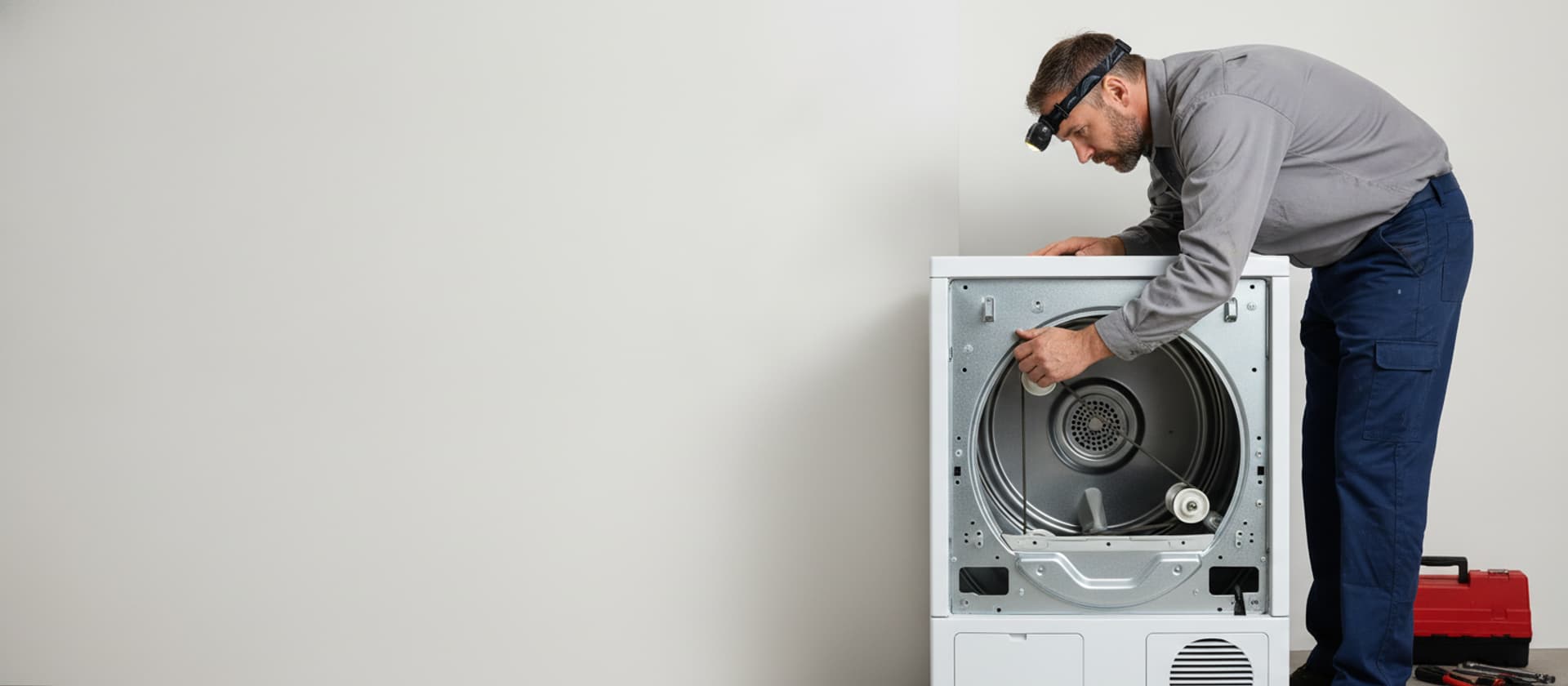
Dryer Squeaking · Diagnostic Guide · Same Day Southern California
Dryer Squeaking? It's Usually the Rollers or Idler Pulley
A squeak or squeal is a worn part the drum rides on — rollers, idler pulley, glides, or belt. Here's what each one sounds like, what's safe to check, and the point where a squeal becomes a stop-now grind.
AI Diagnostic · free · about a minute
Dryer acting up?
Describe it in your own words — get the likely causes and a repair cost range before you book.
Our Branches
10 service territories across Southern California
01 · The short answer
A squeaking dryer is a worn part the drum rides on or is driven by.
Dryers squeak because a moving part has worn: the drum support rollers, the idler pulley that tensions the belt, the drum glides at the front, the drive belt itself, or a rear drum bearing. All of them ride under the weight of a spinning drum, and as they wear they lose their smooth surface and squeal. The sound is a clue — a rhythmic squeak that tracks the drum's speed points at rollers or a bearing, while a steady high squeal points at the idler pulley or belt. A squeak isn't an emergency, but it's an early warning: the same parts that squeak can seize, and a seized part makes heat inside a machine already full of lint. Get the worn part replaced before it grinds. Some are DIY-accessible; a tech pinpoints and swaps the right one in one visit. $89 residential diagnostic, waived with repair.
Squeal you can schedule — a grind means stop. If the squeak has already turned to grinding, scraping, or thumping, shut the dryer off and don't run it. A seized roller or bearing creates friction and heat next to lint. More on that below.
02 · Read the sound
What the squeak is telling you.
You can narrow it down before anyone opens the cabinet, because each part has a signature:
- Rhythmic squeak that speeds up with the drum → drum support rollers or a rear bearing (they turn with the drum).
- Constant high-pitched squeal, doesn't track the drum → idler pulley or drive belt (they spin fast and steady).
- Squeak worst at start-up, eases as it warms → often drum glides or a belt that's stiff cold.
- Squeak plus a burning or hot smell → stop now; a part may be seizing. This is not a schedule-it situation.
None of this replaces a proper look, but it tells you and the tech where to start — and whether it's a squeal you can book or a grind you should shut off.
03 · The parts that squeak
The causes, in the order our techs check them.
Drum support rollers (most common)
The wheels the drum rests and spins on. They wear flat or dry out and squeal under the drum's weight — usually replaced as a set so the fix lasts. One of the two most common squeak sources.
Idler pulley
Keeps tension on the drive belt and spins constantly, so its small bearing wears and squeals. Inexpensive part doing a lot of work — the other most common source.
Drum glides / slides (front)
Plastic pads the front of the drum rides on. When they wear thin, the drum rubs metal-on-metal and squeaks, often worst at start-up.
Drive belt
A cracked or worn belt can squeal as it slips over the drum and pulley. Sometimes the belt and idler are replaced together.
Rear drum bearing
The bearing the back of the drum spins on. When it wears it squeals, then grinds — reaching it means full disassembly, so it's a tech job.
04 · What you can safely check
Before it turns to a grind.
- Unplug the dryer first — and on a gas dryer, shut off the gas before opening anything.
- Clean the lint filter and check the vent. A clogged vent doesn't cause the squeak, but it's the leading dryer-fire risk and worth clearing while a worn part is in play.
- Listen at start-up vs. warm and note whether the squeak tracks the drum — it tells the tech which part to bring.
- If you're comfortable in the cabinet, the belt, idler pulley, and rollers are reachable on many dryers once the top or front panel is off — a glazed roller or cracked belt is visible.
Where to stop: the lint/vent and a visual check are safe. Leave a gas dryer's gas line alone, and leave a rear drum bearing (full teardown) to a tech. If it's already grinding or smells hot, don't run it.
05 · When a squeak becomes a hazard
Don't run a dryer that's grinding.
A squeak is a worn part still working; a grind is a part failing. Once you hear grinding, scraping, or thumping — or smell anything hot — stop running the dryer. A seized roller or collapsing bearing creates friction and heat, and a clogged lint vent is already the leading cause of dryer fires. The two together are exactly the situation to avoid.
So treat the squeak as the free warning it is: replace the worn part before it seizes, and keep the lint filter and vent clear. If you're not sure whether you're hearing a squeal or a grind, that's a fine reason to have us listen.
06 · When to call us
Squealing, or already grinding? We'll pinpoint the part.
Our techs spin the drum by hand with the belt off to isolate exactly which part is singing — rollers, idler, glides, belt, or bearing — and carry the common ones for a one-visit fix. If it's already grinding, we'll get to you before it does more damage.
More help: the dryer not tumbling guide (if the drum won't turn at all, it's often the belt), and if the dryer's slow or not heating, takes too long to dry and not heating. Same-day across Los Angeles, Beverly Hills, and Pasadena in most cases. Book online or call (424) 325-0520.
07 · FAQ
Dryer squeaking: common questions.
Why is my dryer squeaking?
A squeak or squeal almost always comes from a worn moving part the drum rides on or is driven by: the drum support rollers, the idler pulley (which tensions the belt), the drum glides or slides at the front, the drive belt itself, or a rear drum bearing. As these wear, they lose their smooth surface and start to squeal under the drum's weight. Which one it is often depends on the sound — a rhythmic squeak that speeds up with the drum points at rollers or bearings, while a constant high squeal often points at the idler pulley or belt. Some of these are homeowner-accessible; a technician can pinpoint and replace the worn part in one visit. $89 residential diagnostic, waived with repair.
What's the difference between a squeal and a grinding dryer?
It's the difference between 'soon' and 'now.' A squeak or squeal is a worn part still doing its job — the rollers, pulley, glides, or belt are wearing but the drum still turns. Grinding, scraping, or thumping means a part has worn far enough to fail or has come apart: a seized roller flat-spotting, a bearing that's collapsing, or the drum dragging on metal. Once it grinds, stop running the dryer — a seized roller or bearing creates friction and heat, and a dryer already runs hot with lint around, so it's not worth the risk. A squeal you can schedule; a grind you should shut off and get looked at.
Can I fix a squeaking dryer myself?
Sometimes. On many dryers the belt, idler pulley, and drum rollers are reachable once the top or front panel comes off, and those are the usual squeak parts. If you're comfortable unplugging the dryer, opening the cabinet, and you can identify a glazed roller or a cracked belt, it's a doable repair with the right parts. What makes it a tech job: gas dryers (don't disturb the gas line), a rear drum bearing that requires full disassembly, or not being sure which part is worn — replacing the wrong one leaves the squeak. Always unplug first, and on a gas dryer shut off the gas before opening anything.
Which part squeaks most often on a dryer?
The drum support rollers and the idler pulley are the two most common. Rollers are the wheels the drum rests and spins on; they wear flat or dry out and squeal under load, and they're often replaced as a set. The idler pulley keeps tension on the drive belt and spins constantly, so its small bearing wears and squeals — it's an inexpensive part but it's doing a lot of work. Drum glides (front) and a worn belt are next. A tech spins the drum by hand with the belt off to isolate which one is singing, because the fix is different for each.
Is a squeaking dryer dangerous?
A squeak by itself isn't dangerous, but don't ignore it — the same worn parts that squeak can seize, and a seized roller or bearing creates friction and heat inside a machine that's already hot and full of lint. Combined with a lint-clogged vent (the leading cause of dryer fires), that's a real risk. So a squeak is your early warning: get the worn part replaced before it seizes, and while you're at it, make sure the lint filter and vent are clean. If the squeak has already turned to grinding or you smell anything hot, stop running it and call.
Dryer squeaking or grinding? We'll find the worn part.
$89 diagnostic waived with repair. Same-day across LA, OC, Ventura. Phones answered 24/7.